

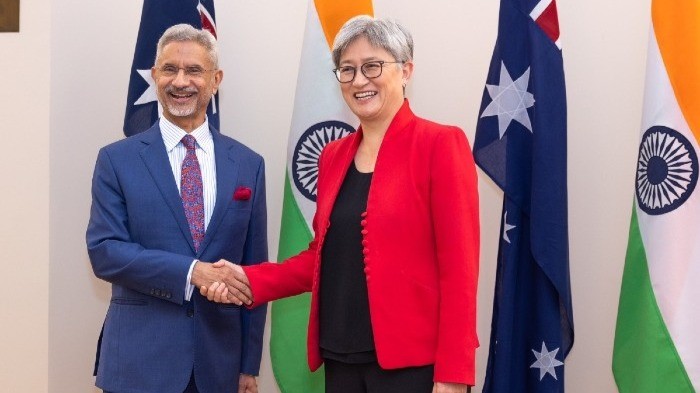
For many Australian businesses, India remains a paradox.
It is recognised as a high-growth opportunity, yet often approached with caution perceived as complex, relationship-driven, and difficult to navigate.
At the same time, ESG has become embedded in corporate strategy across Australia driven by reporting standards, disclosures, and increasing regulatory expectations.
These two trends are rarely discussed together. But they should be.
Not because ESG is a barrier to Australia–India trade but because it is increasingly becoming a differentiator in how partnerships are built, trusted, and scaled.
In Australia, ESG is largely compliance led.
It is structured around:
In India, ESG is less formalised but not absent.
It is reflected in outcomes rather than frameworks:
This creates a subtle but important disconnect.
Australian companies often present ESG credentials. Indian partners assess ESG through visible outcomes and intent.
ESG may not always be explicitly asked for in India but it is consistently assessed through actions.
It is important to be clear: ESG is not what constrains Australia–India trade today.
The primary challenges remain:
These are structural and operational realities.
However, once these barriers are navigated, the question shifts from Can you enter the market? to Can you build a sustainable and trusted presence?
This is where ESG begins to matter.
A common strategic misstep is benchmarking India against China.
As a result, I often hear people commenting (even Indian Government) that 'India is often perceived as slower or more complex'.
But that interpretation overlooks a key distinction: In China, deals may be driven by efficiency. In India, they are built on conviction and continuity.
This is where ESG, particularly when demonstrated through long-term commitment and local engagement can reinforce credibility.
Across sectors, operational decisions are increasingly carrying ESG implications.
Whether it is:
These decisions influence not only:
but also how a business is perceived in-market.
For India, this has practical implications:
In this context, ESG becomes a commercial multiplier not a compliance burden.
Many Australian organisations bring strong capability and intent but face challenges in execution.
Common gaps include:
Addressing these gaps does not require a fundamental shift in capability but it does require a shift in approach.
The future of India–Australia trade will continue to be shaped by structural factors, agreements, policies, and market access.
But beyond that, success will increasingly depend on alignment:
ESG, when applied thoughtfully, can support that alignment.
Not as a reporting framework but as a way of:
There is a growing need for advisory that goes beyond compliance and market entry checklists.
Businesses need support in:
India–Australia trade is no longer just about exporting goods.
It is about exporting intent and demonstrating commitment.
Australia–India trade is evolving.
The next phase will not be defined only by access but by the ability to build enduring partnerships.
ESG is not the deciding factor today.
But it is becoming an important signal of how businesses engage, invest, and operate across borders.
The organisations that succeed will not just understand the market, they will understand how to align with it.